
Walk a Clinton Street by Address
A Clinton street directory search works best when the property comes first. Start with a street number instead of a name. From there, a resident lookup can move to the county parcel, the recorded deed, and the assessor card. It can also draw on whatever lawful household evidence turns up. Each record tells its own story. An assessment card names a deed holder. An old city directory may name a past householder for a single year. If you want to find who lives on a street in Clinton, tie every claim to its record and date. Old place names and street changes matter here too. The legal description often bridges a modern parcel to an earlier address.
- Enter the house number, street name, and Clinton city selection in the county Assessor search. Record the PIN, deed holder, situs address, legal description, and deed reference.
- Open the same Clinton parcel through the Clinton County GIS or Beacon links. Identify each parcel along the target Clinton block instead of assuming that every visible building is a separate lot.
- Follow the latest Clinton deed reference into Iowa Land Records. Compare grantor, grantee, instrument date, document type, and the same legal land description.
- Use Clinton voter information only through Iowa's official lookup or permitted list-request process. A Clinton registration record has use limits and does not name every person at an address.
- For past occupants, ask Clinton Public Library for a city or phone directory year and search the address, old place label, and surname variants together.
The full Clinton chain yields dated statements from separate records, not one live household roster.
Clinton Address Search Fields
The Clinton County Vanguard residential search takes more than an address. That helps when a typed street fails. A rural parcel may have no standard address, or an older record may offer only land notation. The portal can filter parcels with or without photos, then export or print result tables. Values stay subject to review and equalization.
| Field shown | Input style | Address use |
|---|---|---|
| House Number and Street Name | Text with autocomplete | Find a current situs address |
| Deed Holder | Name autocomplete | Find other parcels tied to the recorded owner |
| PIN | Text with wildcard options | Return to one exact parcel |
| City | Selection list | Separate Clinton from county communities |
| Legal Description, Block, Lot | Text | Bridge a platted lot when the address changed |
| Section, Township, Range | Text | Find rural land without a street key |
The official Clinton form shows those distinct search paths.
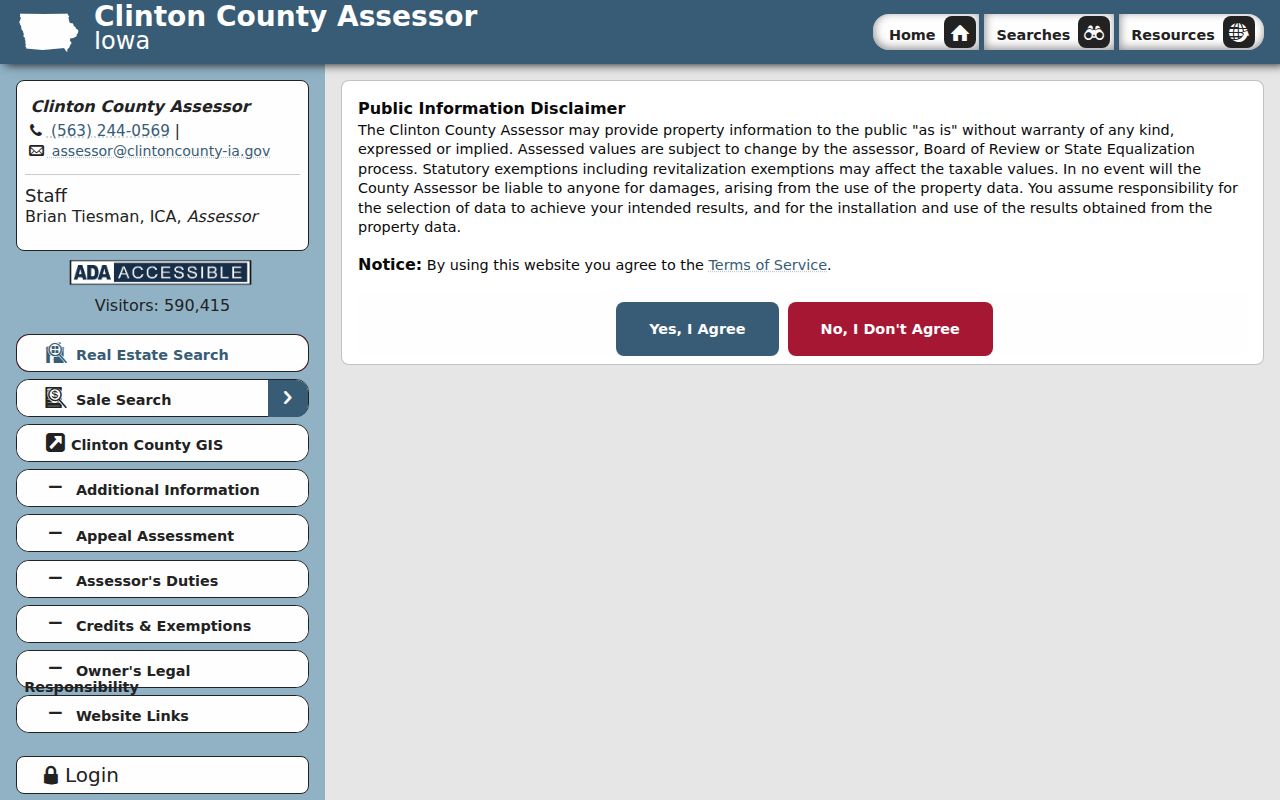
Save both the street label and the legal parcel key from every Clinton by-address result.
Map Clinton Streets Parcel by Parcel
The Clinton County property and GIS hub gathers Beacon Search, Assessor Search, Beacon GIS Map, and Assessor GIS Map in one spot. Clinton Beacon lets you select parcels on the map and run Identify. You can also browse the layer list and work with subdivision controls. Pull parcel reports when you need the details. To walk a Clinton block, start with one parcel. Note its PIN and legal description. Then identify each parcel that touches it and log those numbers too. Rail lines and the river can interrupt what first looks like a tidy row of homes. So can municipal limits and unplatted tracts.
Pulling a Clinton subdivision document takes the Land Records or Subdivisions layer plus the right subdivision selected. Those attachments are updated by hand, so newer affidavits and corrections still deserve a look. Clinton County GIS also cautions that map lines are approximate. Aerial photos are approximate too, and neither is a boundary survey. For legal ownership, the recorded Clinton documents govern. The official Clinton GIS link page keeps every map and report route in one place.
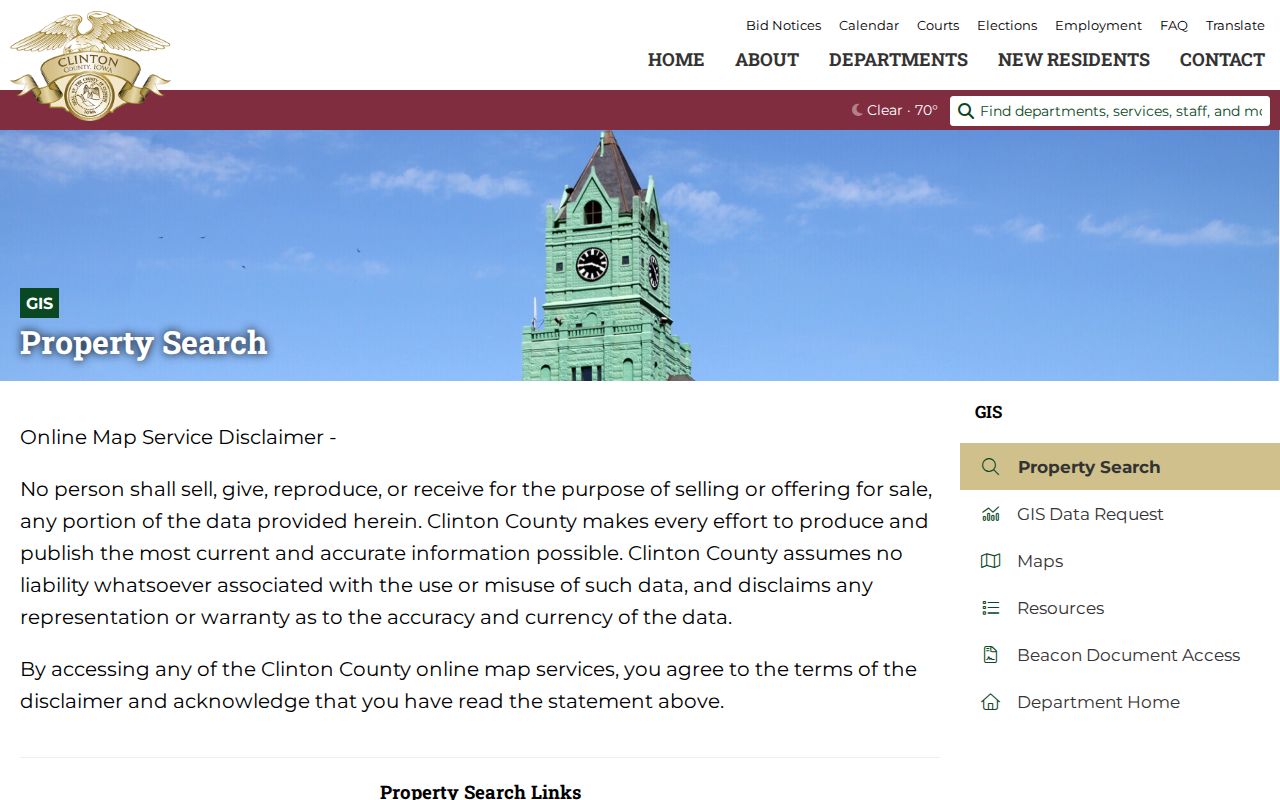
The official Clinton GIS link screen keeps the map and report routes in one place.
Clinton Street Directory Record Coverage
Address-keyed records answer different questions about one Clinton street. Work from the source closest to the fact. The property roll names the current recorded holder. GIS fixes parcel position. The deed index tracks transfers, and city files date a project. Historical directories may name occupants, but only for the printed year.
| Address record | Local keeper | Street fact supplied | Access path |
|---|---|---|---|
| Assessment card | Clinton County Assessor | PIN, deed holder, situs, mailing, legal description, values | Free Vanguard search and office |
| Parcel map and report | County GIS and Beacon | Parcel shape, nearby lots, roads, districts, sales clues | Free viewer and data request |
| Deeds, plats, liens | Clinton County Recorder | Recorded parties, instrument date, legal land identity | ILR account, office books, request form |
| Tax history | County Treasurer | Taxpayer, address or parcel payment context | State payment portal and office |
| Permit and code file | City Clerk and Building Safety | Project, applicant, contractor, inspection and final status | Request by address and year |
| Historical directory | Clinton Public Library | Dated householder or reverse-address entry | Special Collections and research request |
A tax mailing recipient or permit applicant is not automatically a resident. Label each Clinton role exactly as its record does.
Clinton Street Deeds Run Backward
Iowa Land Records Search 2.0 filters Clinton County instruments by recorded date. It also filters by grantor or grantee role, name, company, image availability, document type, and sort order. Start from the recording reference on the current parcel report. The grantee received the interest. The grantor transferred it. Search the prior party and the same legal description to reach the next link backward. The Clinton County-linked online data generally begin in 1986. Older deeds are not lost, though. The Clinton Recorder's books and indexes reach further back. So do the electronic plat index, Auditor transfer books, State Historical Society series, FamilySearch microfilm, and office information requests. Historical holdings include recorded land books from 1840 to 1902. They also include town-lot material from 1840 to 1900. The Iowa Land Records grantor-grantee search shows the live controls.
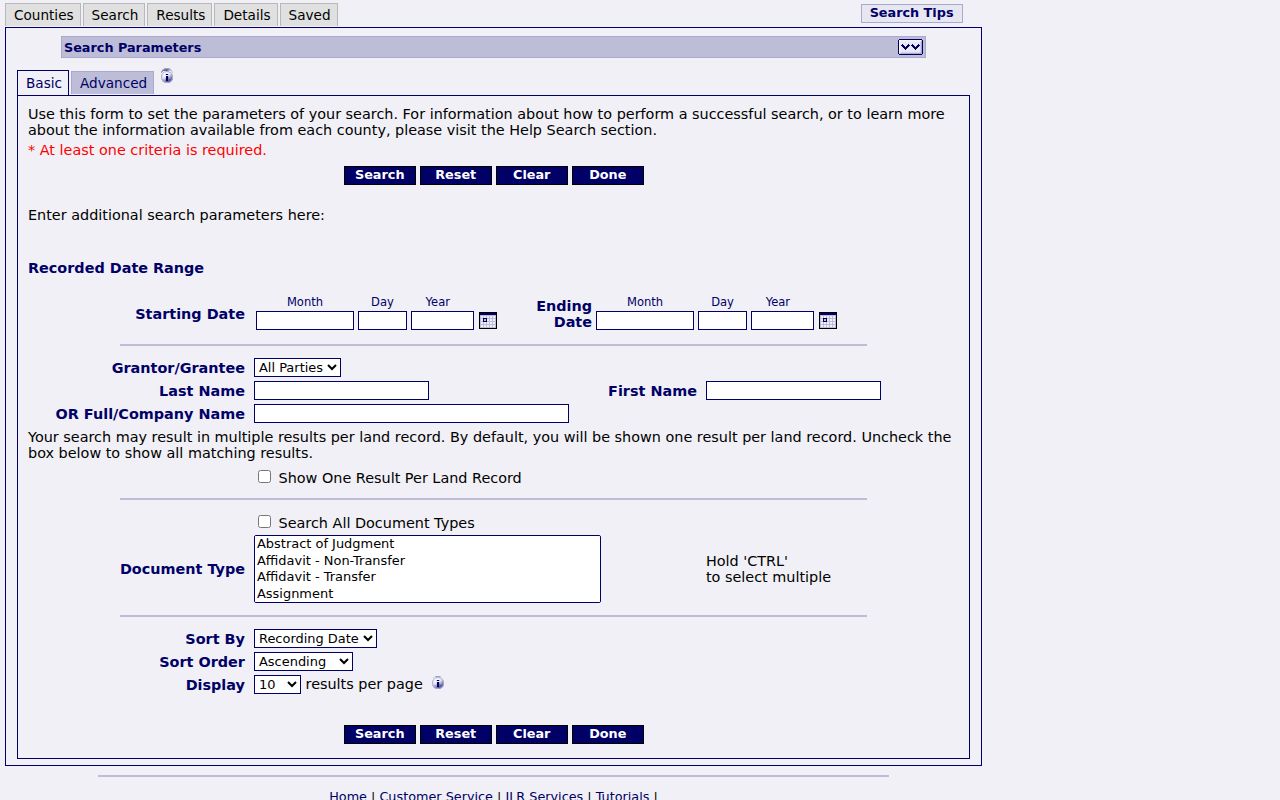
That search form can trace one street parcel through named instruments. It does not prove continuous residence along the Clinton deed chain.
Read Clinton Address Terms Correctly
One Clinton property can carry several addresses and identifiers at once. A street directory only works when they stay separated. The city number directs people to the building. The parcel number directs county databases to the land. The legal description survives changes that break a plain street search.
- Parcel
- A mapped unit of land assigned an administrative county identifier.
- Situs address
- The physical location of the parcel or building, distinct from the tax mailing address.
- Plat
- A recorded map that divides land into lots, blocks, subdivisions, or survey units.
- Criss-cross directory
- An address-first or phone-first directory used to identify a listed householder for a dated edition.
- Legal description
- The lot, block, subdivision, section-township-range, or other land wording carried by recorded instruments.
A Clinton mailing address can point to a trust, lender, agent, or an owner living elsewhere. It is correspondence evidence, not occupancy evidence.
Clinton Permits Require Address Requests
Clinton's city site lays out its permit rules but offers no complete public address search. The City Clerk's permit archive reaches back to 2008. Building Safety keeps project and inspection records. The City Clerk coordinates the public-record route. A focused request works best. Give the street address, parcel if known, approximate year, and project type. Then ask for the permit number and issue date. Also request scope, inspection history, and final or certificate status.
Even open permits can carry restricted release rules for the plans themselves. Clinton Police records run through a separate Records Division channel. Letter-size city copies are listed at fifteen cents per page. A large Clinton request may add search, redaction, or format costs. The strongest Clinton street directory result quotes the permit's named role, such as owner, applicant, or contractor. It does not turn that role into an occupancy claim. The Clinton city request instructions explain the custodian handoff.
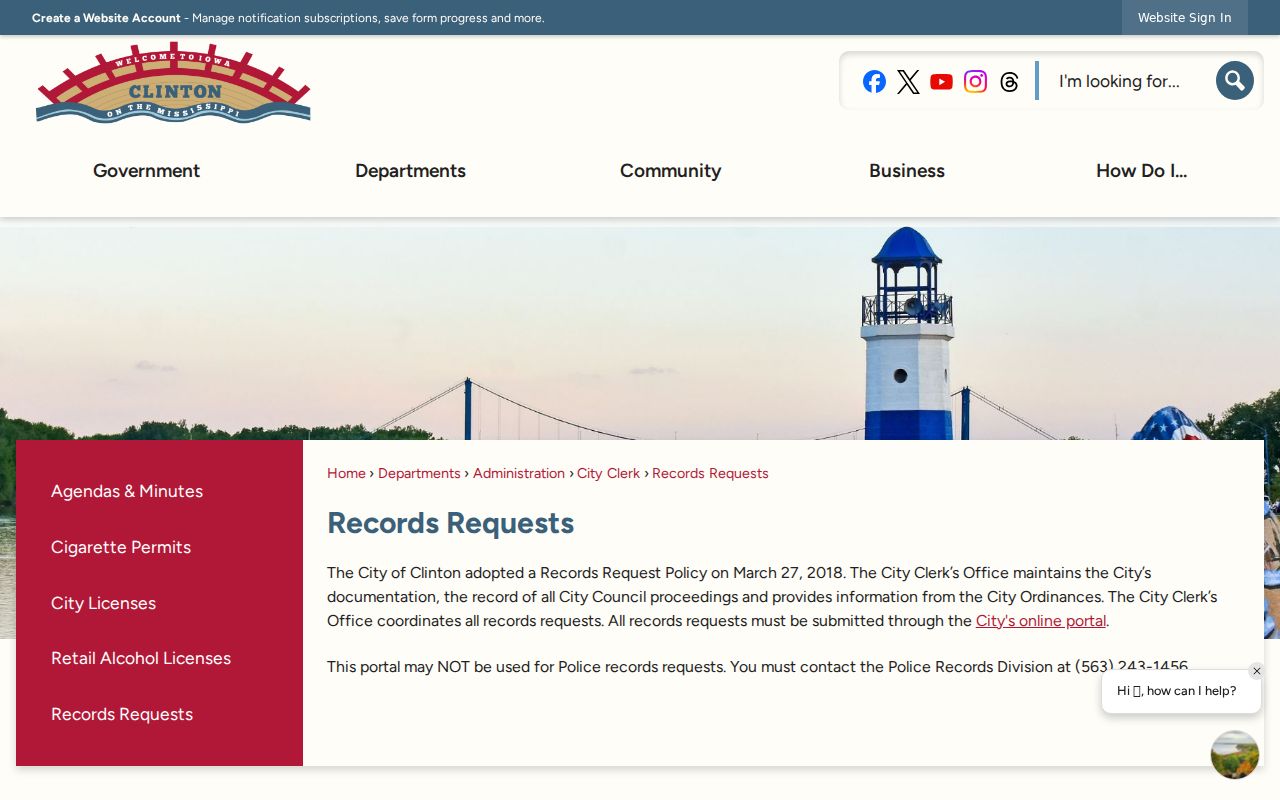
An unindexed address file still sits within reach through the Clinton City Clerk route. A written request, framed by address and year, is the way in for any Clinton residents directory researcher working from a street.
Old Clinton Streets Changed Names
Modern Clinton grew from several separate place and street systems. Bartlett's 1836 plat called the town New York. The Iowa Land Company replatted and renamed it Clinton in 1855. Ringwood joined in 1878, Chancy in 1892, and Lyons in 1894. A 1969 city ordinance changed or established street and avenue names. Older directories may carry a Lyons mark like (L) instead of a modern Clinton label.
Never guess an old-to-new Clinton street match. Set the 1969 ordinance beside current Clinton city code. Then bring in a plat, Sanborn sheet, directory entry, and Recorder legal description. Clinton honorary signs are not legal changes. Current building-number rules require visible numbers. The 2026 Clinton campaign supplied free numbers through the Neighborhood Improvement Committee. A newly visible number still does not date the building.
Note: Search the former Clinton place name, old street wording, block and lot, and present legal description together as one evidence set.
Sanborn Maps Frame Clinton Streets
The Library of Congress holds a public-domain Clinton Sanborn set. It is dated July 1890 and has 22 sheets. Each sheet can show a block and a street name. It can also show a building footprint, a material or use label, and nearby rail, river, or industrial context. The set is a vivid street-by-street snapshot. It is not a current parcel map. It cannot establish present ownership or the person inside a building.
Pair a Clinton Sanborn footprint with a directory line and town-lot record. If the Clinton street label differs, use the plat and legal description. Those records control the match. Clinton Public Library Special Collections holds local maps, directories, photographs, and microfilm that can help. The library publishes no separate Clinton house-history guide. A request should state the address, target era, known owner, and desired map or directory year.
Voter Limits Along Clinton Streets
Iowa's voter-status form demands a known person's first and last name. It also requires a Clinton ZIP, house number, and full birth date. A successful Clinton check can return registration and precinct or polling information. It is not an unrestricted Clinton street directory. A full Clinton voter-file request is a separate process, limited by Iowa Code §48A.38 to stated political and official purposes. It carries jurisdiction, status, party, contact, and participation-history selections.
Clinton's four wards and eight precincts are useful geography, not household lists. Protected addresses and sensitive identifiers come out. Safe at Home supplies a substitute address and confidential voter support for qualifying survivors. Never try to reverse that protection through parcel, directory, or list data.
Old Directories Add Clinton Occupants
A deed chain establishes recorded ownership. A dated city directory can identify a listed householder at an address. Clinton Public Library confirms city directories in Special Collections. Surviving reels cover 1901/02 through 1960 with gaps and overlap. A FamilySearch catalog also lists a 1957 telephone directory. The library publishes no complete reverse-directory year run. Staff must confirm whether a target volume supports an address-first search.
Read each entry as printed. Sample lines change McEleney to McElaney. They lean on abbreviations such as wid, b, wks, and (L). Search OCR variants and initials too. Then compare the directory year against a census, newspaper, deed, or obituary. The Clinton city directory collections provide the full historical shelf method for any residents directory search.
Limits of a Clinton Street Directory
A Clinton Assessor or Beacon record may name an owner. It may also name a contract holder or tax mailing recipient. It does not list every person who stays at the Clinton address. A Clinton city permit names an applicant or contractor. A Clinton voter record covers registered voters under strict rules, while protected addresses stay hidden. Historical Clinton directories are snapshots. They may omit people, use old names, or reflect a prior publication year.
Clinton utility customer lists, delivery data, and current personal DMV addresses are not substitutes. Iowa and federal driver-privacy rules protect personal motor-vehicle information. A Clinton GIS neighbor is merely an adjoining parcel. It says nothing about a social or family tie. Treat every Clinton source as limited. Date each finding. Verify sensitive facts with the official custodian of the records.
Lawful use. Use Clinton address records for legitimate personal, family, property, or civic research. Never stalk, harass, intimidate, or expose a protected person.